Every piece of cakoi you enjoy at Soooka Cafe in Damansara Perdana begins with a specific history that stretches back 25 years. It is a narrative of patience, dedication, and an unwavering commitment to a craft that many overlook. Behind our golden, crispy cakoi is an artisan whose entire life has centred on perfecting one thing: the dough.
Meeting Our Cakoi Artisan
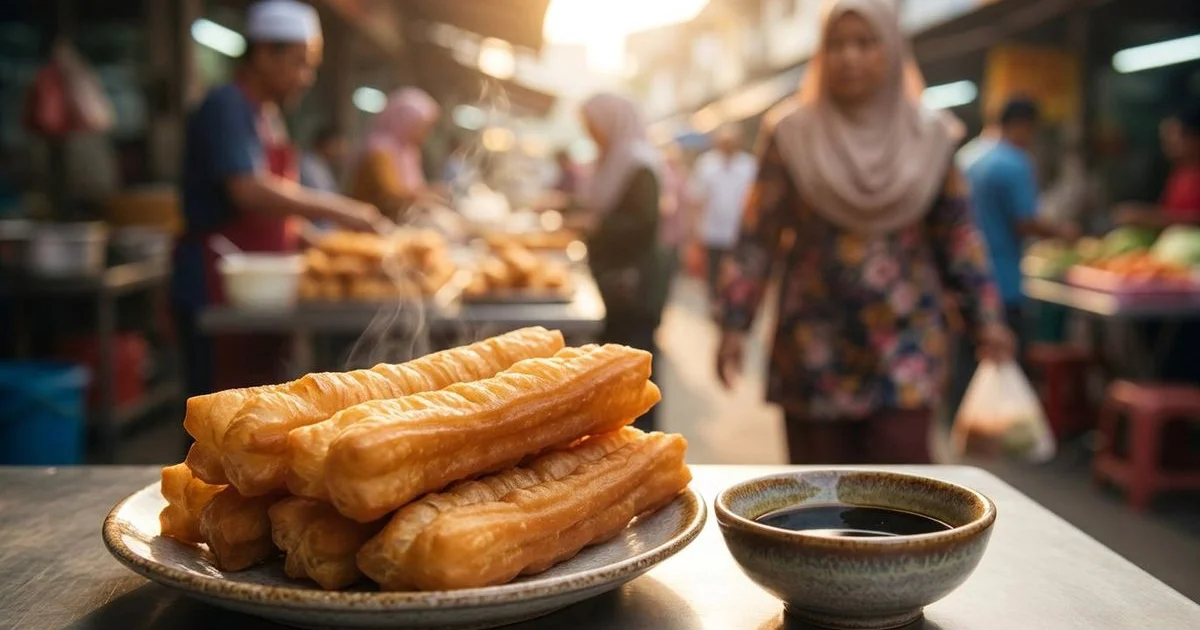
When we — Francis and Esther — first began planning Soooka Cafe in 2023, we knew that cakoi would be the anchor of our signature cakoi menu. Growing up, we ate cakoi from morning markets across Malaysia. We understood that the difference between forgettable and extraordinary cakoi always comes down to the dough quality.
Finding the right supplier took months of sampling across the Klang Valley. Some samples were heavy and doughy. Others carried the sharp, chemical sting of ammonia, a common shortcut used to force dough to rise quickly. Many lacked that distinctive honeycomb interior, the delicate network of air pockets that gives truly great cakoi its signature lightness.
Our search eventually led us to our artisan.
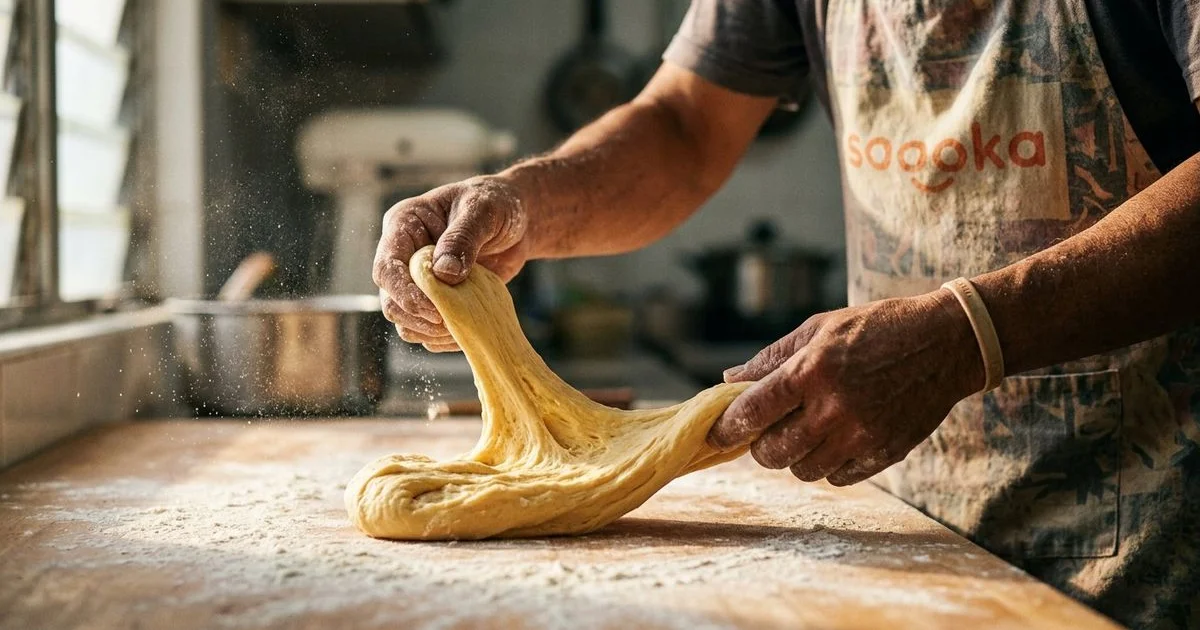
He prefers to stay out of the spotlight, so we respect his privacy. This quiet master has been making cakoi dough — and nothing but cakoi dough — for a quarter of a century. The craft came to him as a young man while apprenticing under an older generation of dough makers. These mentors inherited the tradition from their forebears in an era before industrial shortcuts became the norm.
The Science of the Dough
What makes his dough different? It starts with the chemistry of the ingredients. While the basic recipe for cakoi (or Youtiao) is widely known — flour, water, baking powder, salt, and a leavening agent — the proportions and the hydration levels make all the difference.
The Flour Blend
Our artisan uses a specific blend of flours that he has refined over decades to control protein content. High-protein flour creates a chewy texture, while low-protein flour creates crispness. His secret ratio achieves both.
This precise balance produces a dough with exactly the right elasticity and moisture content. Too much of one flour type makes the cakoi dense and bready. Too little of another results in a structure that collapses after frying.
The Fermentation Factor
The fermentation process is where the real magic happens. Commercial producers often rush this stage using chemical accelerators like ammonium bicarbonate to pump out product in two hours.
Real flavour requires time.
The dough must rest for a precise period to allow the gluten network to relax and the air pockets to develop naturally. Our artisan does not use a clock. He relies on touch and instinct honed over 25 years. He knows the dough is ready by the way it feels under his hands and the way it springs back when pressed.
Artisan vs. Commercial Cakoi
Here is how our artisan approach compares to the standard mass-produced options found in many markets:
| Feature | Soooka’s Artisan Dough | Standard Commercial Dough |
|---|---|---|
| Leavening Agent | Aluminum-free baking powder | Ammonium bicarbonate / Alum |
| Fermentation Time | Extended (Cold fermentation) | Rushed (1-2 hours) |
| Aroma | Fresh wheat and fried dough | Faint chemical or ammonia smell |
| Texture | Crispy outside, honeycomb inside | Often tough, chewy, or oily |
| Aftertaste | Clean and savoury | Metallic or astringent |
Why We Chose This Partnership
The difference was immediately clear when we first tasted cakoi made from his dough. The exterior fried to a deep, even golden colour that remained crispy without turning hard. Breaking it open revealed that beautiful honeycomb structure of air pockets. Each hole was a testament to proper fermentation.
The interior texture was soft, slightly chewy, and almost cloud-like in its lightness.
Beyond the quality, his philosophy resonated with us. During our first meeting, he explained that he could easily double his production by switching to machine mixing and standardised timing. He chooses not to because “the dough knows when you rush it.”
This philosophy aligns perfectly with what we are building at Soooka Cafe. The best food comes from people who care deeply about their craft. We prefer to work with partners who would rather make less and make it better than compromise quality for volume.
From Dough to Your Plate
Each morning, our artisan’s dough arrives at our shop in Damansara Perdana. It is ready for the next stage of its lifecycle. Our kitchen team takes over from there to shape, stretch, and fry each piece of cakoi to order.
The frying process is its own discipline that requires strict attention to thermal dynamics.
The Frying Technique
Oil temperature must be maintained between 180°C and 190°C. If the oil is too hot, the exterior burns before the interior cooks through. If it is too cool, the dough acts like a sponge and becomes sodden with oil.
Our cooks have learned to read the oil the same way our artisan reads his dough: through experience, attention, and care.
Signature Pairings
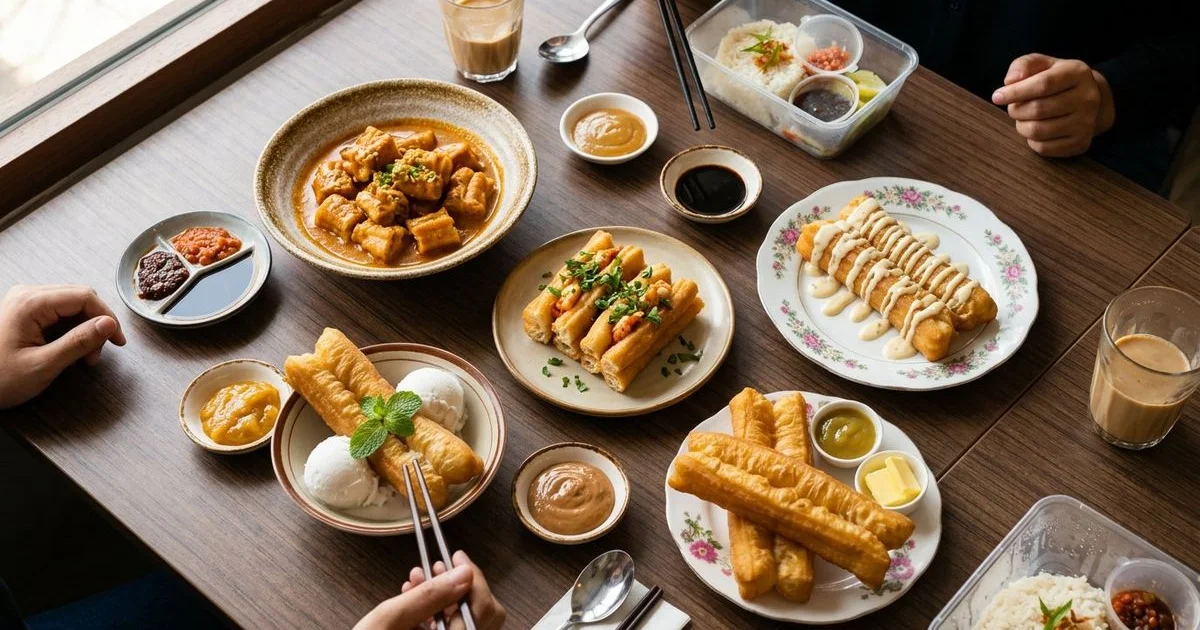
Once fried, the cakoi becomes the canvas for our creative dishes:
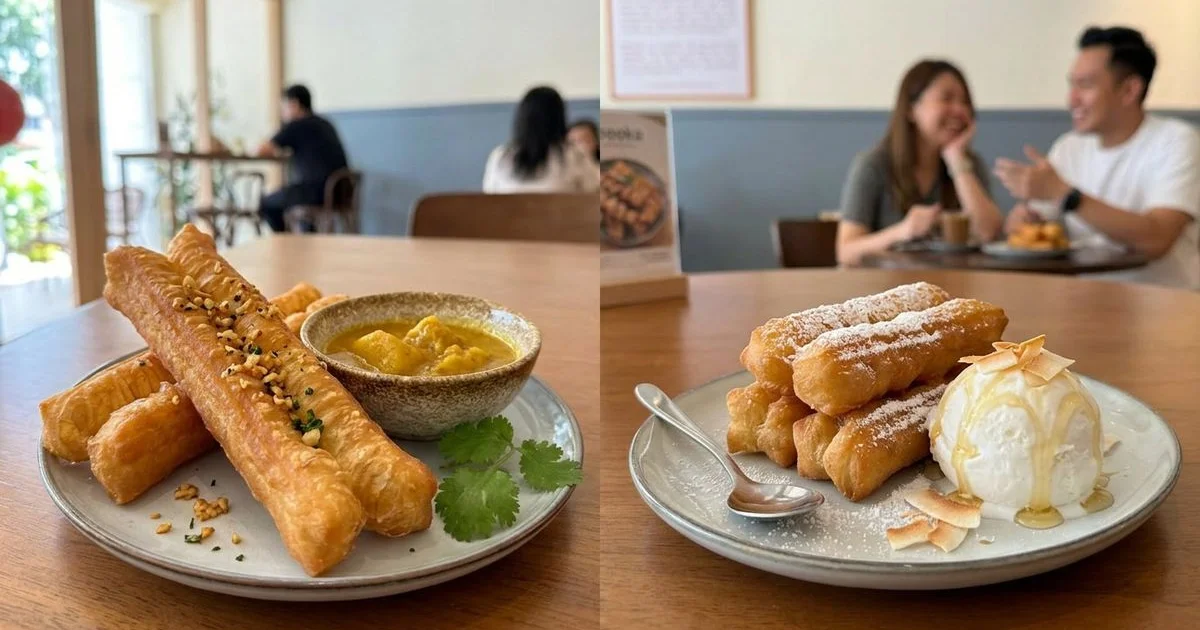
- Garlic Cakoi with Curry Potato Dip: This is the savoury showstopper that regulars order most frequently. The curry provides a spicy richness that cuts through the fried dough.
- Cakoi with Coconut Ice Cream and Jackfruit: A dessert that bridges hawker tradition and modern cafe culture. The hot, salty cakoi contrasts perfectly with the cold, sweet coconut.
- Cakoi paired with our signature porridge: The classic combination elevated with our handmade fish balls. The porous texture of the cakoi soaks up the silkiness of the porridge.
Each dish celebrates the quality of the dough while adding Soooka’s own creative touch.
Preserving a Disappearing Craft
There is a broader story here as well regarding Malaysian food heritage. Across the country, traditional food artisans are becoming increasingly rare. The economics of handmade food production make it difficult to compete with factory-made alternatives that flood the freezer aisles.
Younger generations often choose different career paths. This means the knowledge accumulated over decades risks being lost entirely.
Partnering with our cakoi artisan and making his dough the centrepiece of our menu is our way of keeping this craft alive. Every order of cakoi at Soooka Cafe is a vote for artisan quality. It supports tradition and the kind of food that simply cannot be replicated by a machine.
Come Taste the Difference
We often say that you can taste the 25 years in every bite. It is simply true rather than a marketing slogan. The lightness, the crispness, and the subtle complexity of flavour that comes from properly fermented dough are things that only time and mastery can produce.
Next time you visit Soooka Cafe in Damansara Perdana, take a moment with your first piece of cakoi. Notice the colour. Listen to the crunch. Feel the airy texture inside.
You are experiencing a quarter-century of dedication delivered fresh to your plate every single day. That is the story behind our cakoi dough, and we think it is a story worth telling.
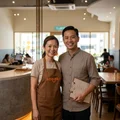
Francis & Esther
Founders & Owners
Francis and Esther are the husband-and-wife team behind Soooka Cafe in Damansara Perdana, Petaling Jaya. Driven by a passion for reimagining Malaysian comfort food, they founded Soooka in 2023 to create a cosy neighbourhood space where heritage flavours meet modern cafe culture.