[AddInfographic]
A Guide to Malaysian Comfort Food — Modern Cafe Style
You know the feeling of craving a hot bowl of curry mee or silky porridge but dreading the midday heat that comes with a hawker centre visit. For many Malaysians, the trade-off has always been clear: suffer the sweat for the authentic taste, or compromise on flavour for air-conditioned comfort.
But the landscape of local dining is shifting rapidly.
We have observed a fresh wave of eateries proving that you do not have to choose between heritage flavours and a comfortable environment. A new standard is emerging where traditional recipes are treated with the same precision as third-wave coffee.
This evolution is not about gentrification. It focuses on preservation and adaptation.
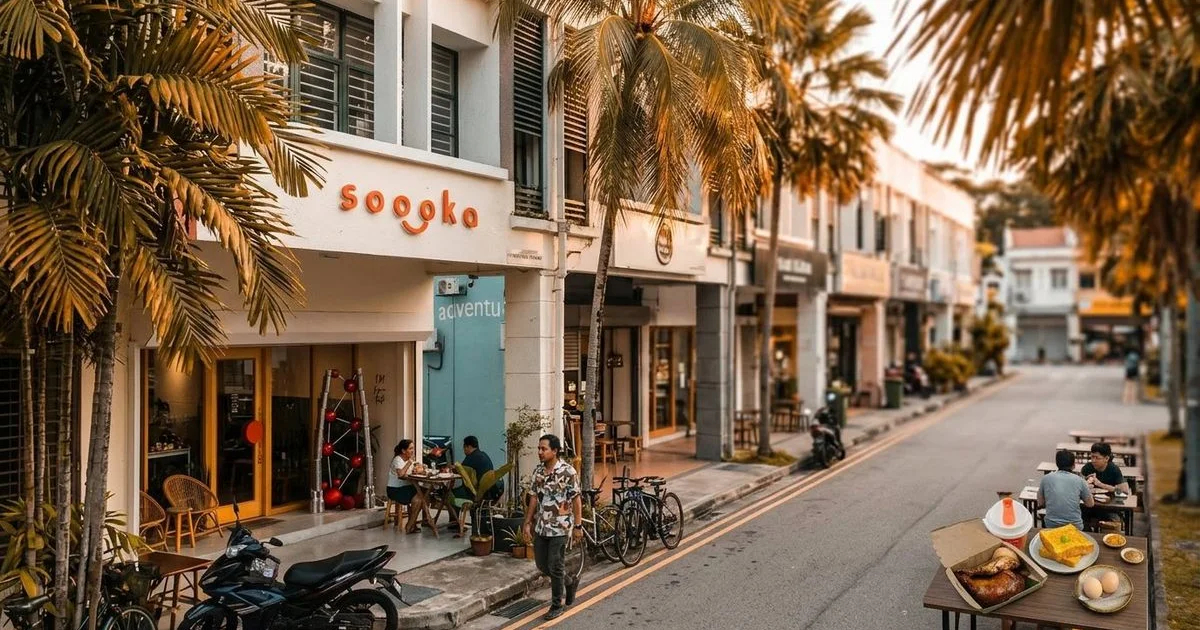
Our team at Soooka Cafe in Damansara Perdana, founded by husband-and-wife duo Francis and Esther in August 2023, built our entire philosophy around this balance. We realized that as lifestyles change, the way we enjoy our national dishes must evolve too.
Let’s look at why this shift is happening, the data behind the trend, and how you can find the best modern comfort food experiences in the Klang Valley.
What Is Malaysian Comfort Food?
Before we talk about the modern evolution, it helps to understand what defines Malaysian comfort food in the first place. Unlike Western comfort food, which often centers on heavy cream or cheese, our local definition is built around complex spice pastes (rempah), satisfying textures, and communal memory.
Genuine Malaysian comfort food relies on the interplay of textures. Locals refer to this as “QQ” (bouncy/chewy) or “lemak” (rich/creamy).
Some of the pillars include:
- Porridge (Congee): A canvas for texture, often topped with crispy dough and century egg.
- Braised Meats: Teochew and Hokkien traditions that use soy sauce and five-spice to break down collagen over hours — like our comfort bowls and mains.
- Noodle Soups: Dishes like pan mee or curry mee that provide hydration and warmth.
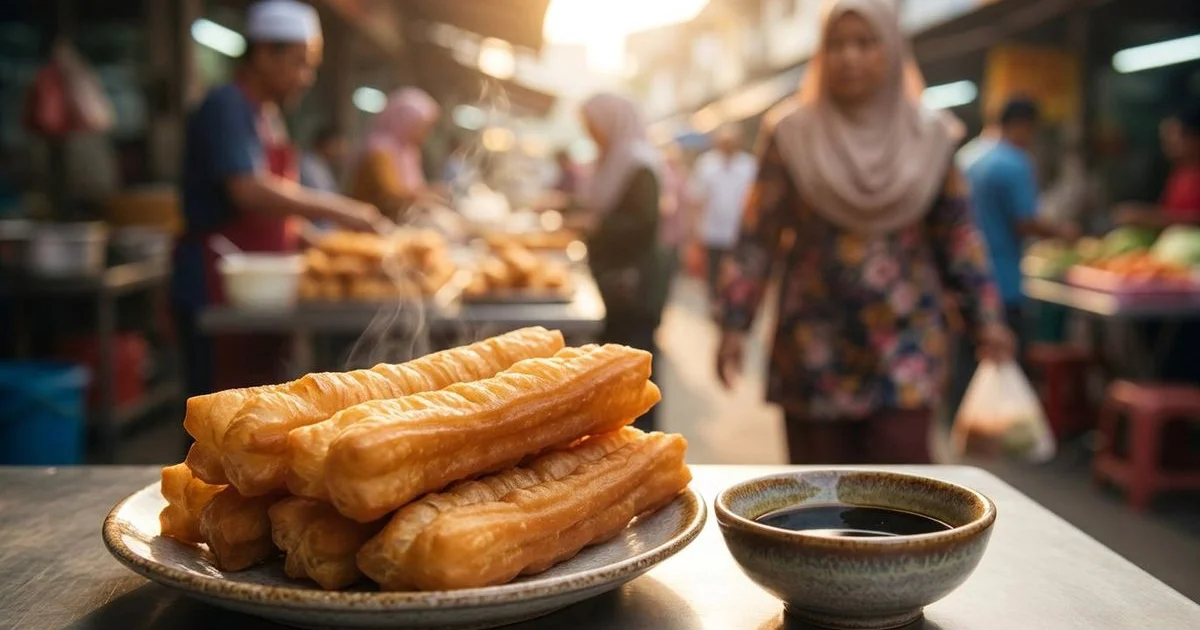
- Fried Dough (Cakoi): The ultimate vessel for soaking up sauces, from kaya to curry.
- Roti Canai: A flaky flatbread that serves as a daily staple for millions.
These dishes share a common thread: they provide emotional nourishment. They are the meals you turn to when you are tired, stressed, or missing home.
The Hawker Heritage and Its Challenges
For decades, these traditions lived primarily in hawker centres and kopitiams. These spaces are the backbone of our culinary identity, and their significance was cemented when Malaysian hawker culture earned UNESCO recognition.
However, the traditional hawker model faces significant headwinds in 2026.
We are seeing Malaysia rapidly becoming an “aged nation.” Recent data from the Department of Statistics Malaysia (DOSM) indicates that the percentage of the population aged 65 and over is increasing faster than anticipated, creating a succession crisis for family-run stalls.
Many of the hawker legends we grew up with are retiring without successors.
The economic pressure is also intense. For instance, the cost of raw ingredients like butter and high-protein flour has seen global fluctuations that impact local prices. A standard 4kg tin of commercial kaya has jumped significantly in price over the last few years. This forces stalls to either cut corners or raise prices in a price-sensitive market.
We see the modern cafe model as a necessary evolution to keep these flavours alive. By moving these traditions into a more sustainable business model, we can ensure that the next generation still gets to experience authentic kuey teow and cakoi.
The Modern Cafe Evolution
This is where the modern comfort cafe steps in. Across the Klang Valley, from Petaling Jaya to Damansara Perdana, operators are taking heritage recipes and giving them the respect they deserve in a setting that fits modern life.
The approach focuses on “elevating without alienating.”
We believe it is about taking the foundational recipes and executing them with consistent, high-quality ingredients in a space where you can actually relax. At Soooka Cafe, we apply this by blending regional inspirations with family techniques.
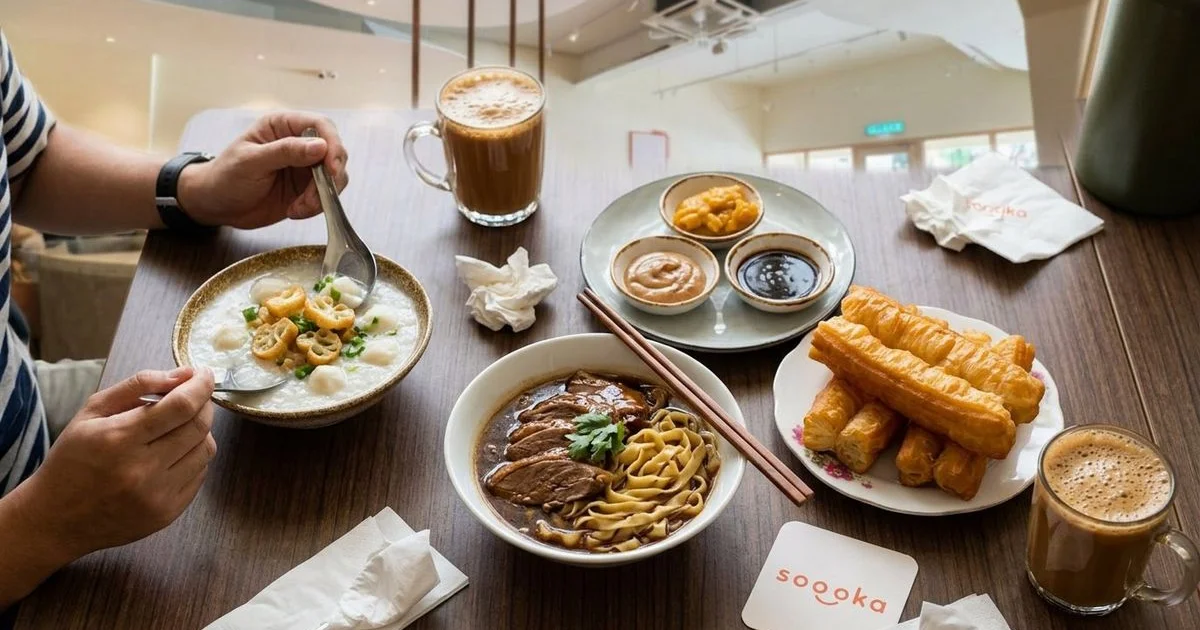
Our Braised Duck Flat White Noodles are a prime example. This dish combines Teochew braising methods with Thai-inspired broth notes for a unique depth of flavour.
We serve this in a minimalist, air-conditioned space because we believe you taste more when you are not distracted by the heat. The goal is to let the food speak for itself while you enjoy a pace of dining that isn’t rushed.
Key Elements of Modern Comfort Cafe Style
Several specific pillars define this new wave of Malaysian dining. If you are looking for a quality spot, here is what you should look for:
1. Ingredient Obsession
Modern comfort cafes distinguish themselves by refusing to use industrial shortcuts. Instead of mass-produced pastes, kitchens are returning to artisan suppliers.
We source our cakoi from a specialist with over 25 years of frying experience. This ensures that every piece has that perfect airy structure that factory-made versions simply cannot replicate. High-quality flour with a protein content of 11-13% is essential for that specific “crumb” structure, something mass-market alternatives often lack.
2. Technique Preservation
The best cafes use technology to support tradition rather than replacing it. While we might use modern combi-ovens for consistency, the core processes remain manual and time-consuming.
Our Handmade Fish Paste Ball Porridge involves shaping fresh fish daily to achieve that essential “QQ” bounce. The bounce comes from the activation of myosin proteins in the fish meat, which only happens through the physical act of throwing and mixing the paste manually. This is a technique that automation struggles to replicate perfectly.
3. The “Thermal Comfort” Factor
There is a practical reason for the shift indoors. With Malaysian outdoor temperatures regularly hitting 32°C-34°C (and often feeling like 38°C due to humidity), the appetite for hot soup at a roadside stall is diminishing for office workers.
Modern cafes offer a controlled environment of 23°C-24°C. This temperature control allows diners to enjoy hot, spicy dishes like curry or broth-heavy noodles without physical discomfort.
4. Creative Combinations
Innovation in this space is about finding new contexts for old favourites. It is not about fusion confusion. It is about logical evolution.
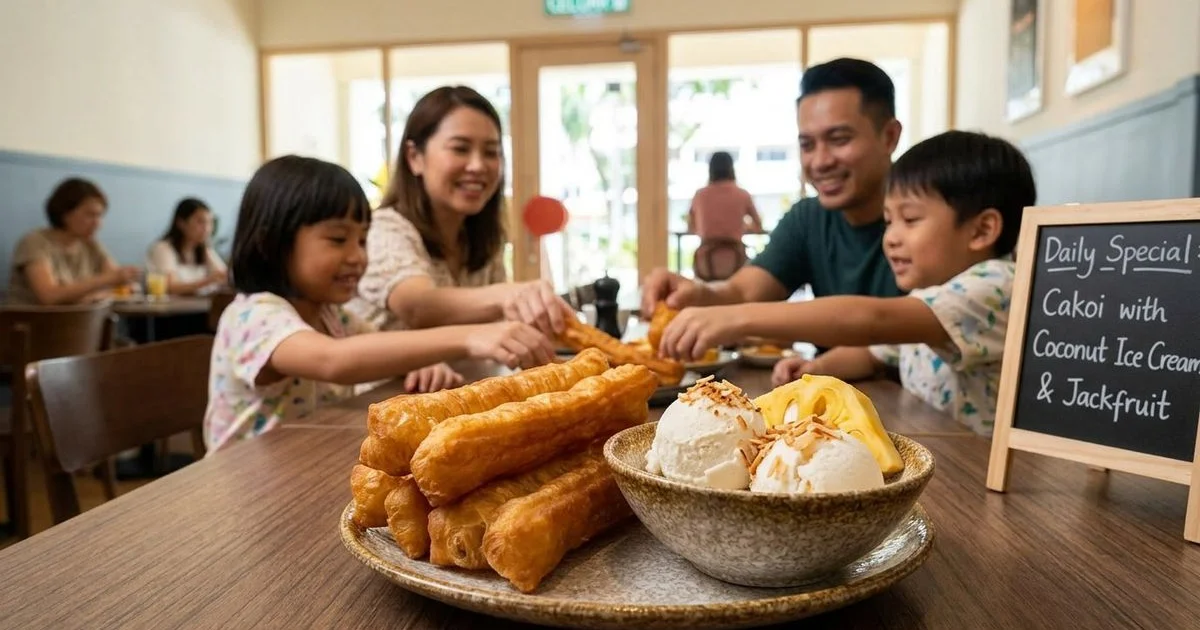
We serve our cakoi with unexpected pairings. One popular choice is serving it with coconut ice cream and jackfruit. This transforms a breakfast staple into a sophisticated dessert by highlighting the versatility of the dough’s texture against the cold creaminess of the ice cream.
Comparison: Traditional Hawker vs. Modern Comfort Cafe
To help you decide where to dine, here is a breakdown of what to expect:
| Feature | Traditional Hawker Stall | Modern Comfort Cafe (e.g., Soooka) |
|---|---|---|
| Average Price (Main) | RM9.00 - RM12.00 | RM18.00 - RM25.00 |
| Environment | Open-air, approx. 32°C, communal seating | Air-conditioned, approx. 24°C, private tables |
| Service Style | Self-service / Quick turnover | Table service / Relaxed pacing |
| Ingredient Sourcing | Cost-focused (often bulk suppliers) | Quality-focused (artisans/fresh daily) |
| Best For | Quick, cheap fuel on the go | Meetings, remote work, or savouring a meal |
Finding Your Comfort
The beauty of Malaysian comfort food lies in its ability to reset your day. Whether it is served from a zinc-roofed stall or a polished cafe counter, the goal remains the same: deep emotional satisfaction.
We invite you to experience this evolution firsthand. If you are in Petaling Jaya, come visit us at Soooka Cafe in Damansara Perdana to taste how we are keeping these traditions alive.
Whether it is a bowl of our slow-braised duck noodles or a plate of garlic cakoi with curry potato, we promise flavours that feel like home.
Come discover the comfort. Your favourite dish is waiting.
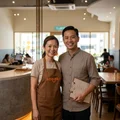
Francis & Esther
Founders & Owners
Francis and Esther are the husband-and-wife team behind Soooka Cafe in Damansara Perdana, Petaling Jaya. Driven by a passion for reimagining Malaysian comfort food, they founded Soooka in 2023 to create a cosy neighbourhood space where heritage flavours meet modern cafe culture.