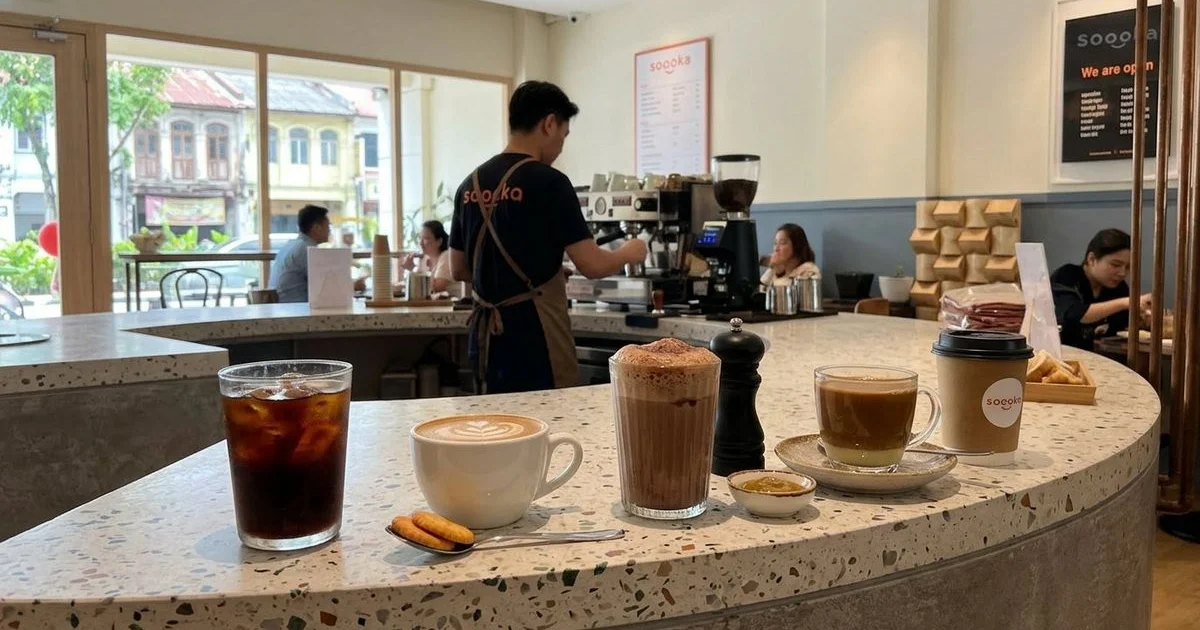
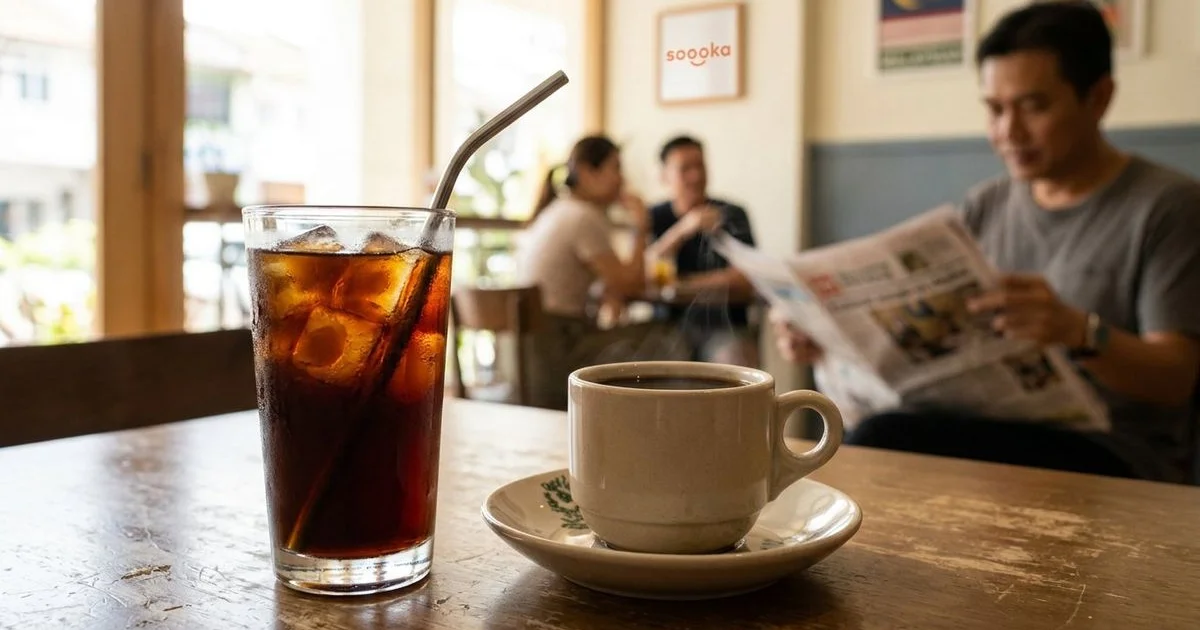
If you visit Soooka Cafe in Damansara Perdana, you might notice that our cold brew kopi quickly sells out.
New customers often pause in surprise after their first sip.
You know that sharp, biting bitterness that usually defines a strong cup of local coffee?
It is conspicuously missing here.
We hear customers comment daily on how distinct it tastes compared to the regular iced coffee they drink at the mamak.
The profile is smoother, significantly less acidic, and carries a caramel-like sweetness that seems to appear out of nowhere.
You might be wondering what exactly separates this from your standard morning drink.
We are going to break down the science, the local tradition, and the reason this brewing method from our desserts and specialty beverages menu has captured the attention of the Damansara Perdana community.
Understanding Traditional Malaysian Kopi
Before explaining the cold brew process, we need to look at what makes Malaysian kopi unique globally.
Malaysian kopi differs significantly from the Arabica-based espresso culture found in Western specialty shops.
Local traditions rely heavily on Liberica and Robusta beans.
We are actually one of the few countries in the world that cultivates Coffea liberica commercially.
This species accounts for less than 2% of global coffee production, making it a rare gem in the coffee world.
These beans are known for being heartier and more full-bodied than their delicate Arabica cousins.
To create that familiar kopitiam taste, roasters cook these beans with margarine and sugar.
This unique roasting process, often called torrefacto, creates the dark colour, caramelised sweetness, and smoky profile that defines our local coffee heritage.
When your grandmother orders a “kopi” at a shop, she receives a drink that is fundamentally different from a latte in Melbourne or London.
Neither is superior.
They are simply distinct traditions with their own loyal followings.
What Is Cold Brew?
Cold brew coffee is defined by its temperature rather than the bean itself.
The concept is simple, yet the impact on the final cup is drastic.
The process is all about time replacing heat.
We steep coarsely ground coffee in cold or room-temperature water for an extended period, usually between 12 to 24 hours.
Filtration removes the grounds after this long soak to produce a concentrated liquid.
Why does this change the taste?
Temperature alters the chemical extraction process completely.
Hot water acts as an aggressive solvent that extracts compounds rapidly.
It pulls out oils, fatty acids, and chemical compounds like titratable acids that can oxidise into bitterness.
Cold water extracts flavours much more selectively.
This gentler method pulls out the sugars and caffeine but leaves behind many of the heavy oils responsible for harsh flavours.
The Chemistry of Extraction
A 2020 study published in Scientific Reports confirmed that cold brew samples show different chemical compositions regarding acidity and antioxidant activity compared to hot brews.
The result is a beverage that is remarkably smooth and naturally sweet.
People who usually find black coffee too aggressive often discover they can drink cold brew without milk or sugar.
Here is how the extraction differs:
- Hot Brew: Rapid extraction of chlorogenic acid, which degrades into quinic acid (the bitter taste).
- Cold Brew: Slow diffusion preserves the aromatic compounds without degrading the acids.
Cold Brew Kopi: The Malaysian Twist
At Soooka Cafe, we apply this modern cold brew technique specifically to traditional Malaysian-style kopi beans.
This fusion creates a flavour profile you will rarely find at international coffee chains.
We combine the caramelised depth of the margarine-roasted bean with the gentle extraction of the cold brew method.
Our specific brewing parameters include:
- Steeping Time: We brew for exactly 18 to 20 hours. Extensive testing showed us that 12 hours was too weak, while anything over 22 hours began to introduce bitterness.
- Grind Consistency: We use a coarse setting similar to raw sea salt. Fine grinds would choke the filter and make the coffee “muddy.”
- Filtration: We filter the liquid twice to ensure a clean mouthfeel.
Since founding Soooka Cafe in August 2023 as a husband-and-wife team, we have refined this recipe to highlight the best of both worlds.
The outcome is a drink that retains the “kaw” (strength) of local kopi but removes the sharp bite.
Flavour Profile Comparison
Making a choice between these options can be confusing if you do not have the data side-by-side.
The table below outlines exactly how our cold brew differs from the standard options you might find at a mamak or cafe.
| Feature | Regular Hot Kopi | Standard Iced Coffee | Cold Brew Kopi |
|---|---|---|---|
| Acidity (pH) | High (pH ~4.8-5.1) | Medium-High | Low (pH ~6.0-6.3) |
| Bitterness | Moderate to Strong | Moderate | Minimal |
| Sweetness Source | Added sugar/condensed milk | Added sugar | Natural bean sweetness |
| Mouthfeel | Heavy and oily | Thin (as ice melts) | Full and velvety |
| Prep Time | 5 minutes | 5 minutes | 18-20 hours |
| Best For | A bold wake-up call | A quick cool down | A refined, sipping experience |
The feedback we receive most often involves the texture.
First-time drinkers frequently say, “This does not taste like coffee.”
We take this as a compliment.
It means the process successfully eliminated the harsh edges while preserving the complex, chocolatey notes of the Liberica and Robusta beans.
Health Considerations
Cold brew offers specific benefits beyond just taste.
The acidity difference is measurable.
Cold brew coffee typically has a pH level of around 6.0 to 6.3, whereas hot coffee often sits between 4.8 and 5.1.
On the pH scale, this means hot coffee is significantly more acidic.
For customers with sensitive stomachs or acid reflux (GERD), cold brew is often a much gentler alternative that allows them to enjoy caffeine without discomfort.
Caffeine Efficiency
The long contact time between water and grounds extracts caffeine very effectively.
Do not underestimate the strength of the concentrate.
While the concentrate is strong, we dilute it to a safe, enjoyable level.
You get a sustainable energy lift without the sudden jitters associated with espresso shots.
Reducing Sugar Intake
Sugar reduction becomes easier with this method.
Because the cold extraction highlights natural sweetness, many of our customers stop adding condensed milk entirely.
This allows you to enjoy a treat while significantly lowering your daily sugar intake.
How to Enjoy Cold Brew Kopi at Soooka
We serve our cold brew in several styles to suit different preferences.
- Black over ice: This is the purest way to taste the caramel and roasted notes.
- With fresh milk: A splash of dairy adds a creamy texture that resembles a latte but with a local twist.
- With coconut milk: This dairy-free option pairs exceptionally well with the margarine-roasted notes, creating a flavour profile similar to a liquid kaya.
Our advice for beginners is to take the first sip black.
Taste the actual kopi before you modify it.
You might be surprised to find that the bitterness you usually try to mask with sugar simply isn’t there.
Pairing Cold Brew Kopi with Food
The clean finish of cold brew makes it an excellent companion for rich, savoury foods.
It cuts through oiliness without overpowering the palate.
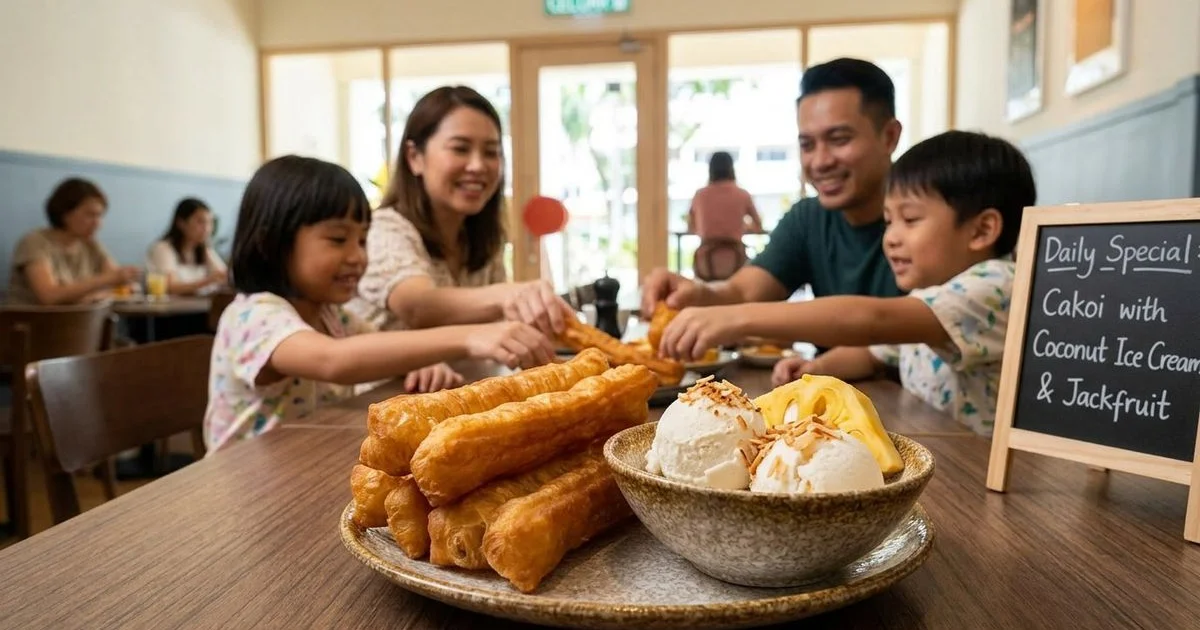
We specifically recommend pairing it with Cakoi.
The contrast between a crispy, fried Cakoi (Youtiao) and the cold, smooth coffee is a texture combination that works perfectly.
For a sweet finish, try the cold brew alongside our Cakoi with coconut ice cream.
The coffee’s roasted undertones balance the sweetness of the ice cream, preventing the dessert from becoming cloying.
Next time you are in Damansara Perdana, come visit us.
Give the cold brew kopi a try and see how a change in temperature can change your entire perspective on Malaysian coffee.

Francis & Esther
Founders & Owners
Francis and Esther are the husband-and-wife team behind Soooka Cafe in Damansara Perdana, Petaling Jaya. Driven by a passion for reimagining Malaysian comfort food, they founded Soooka in 2023 to create a cosy neighbourhood space where heritage flavours meet modern cafe culture.